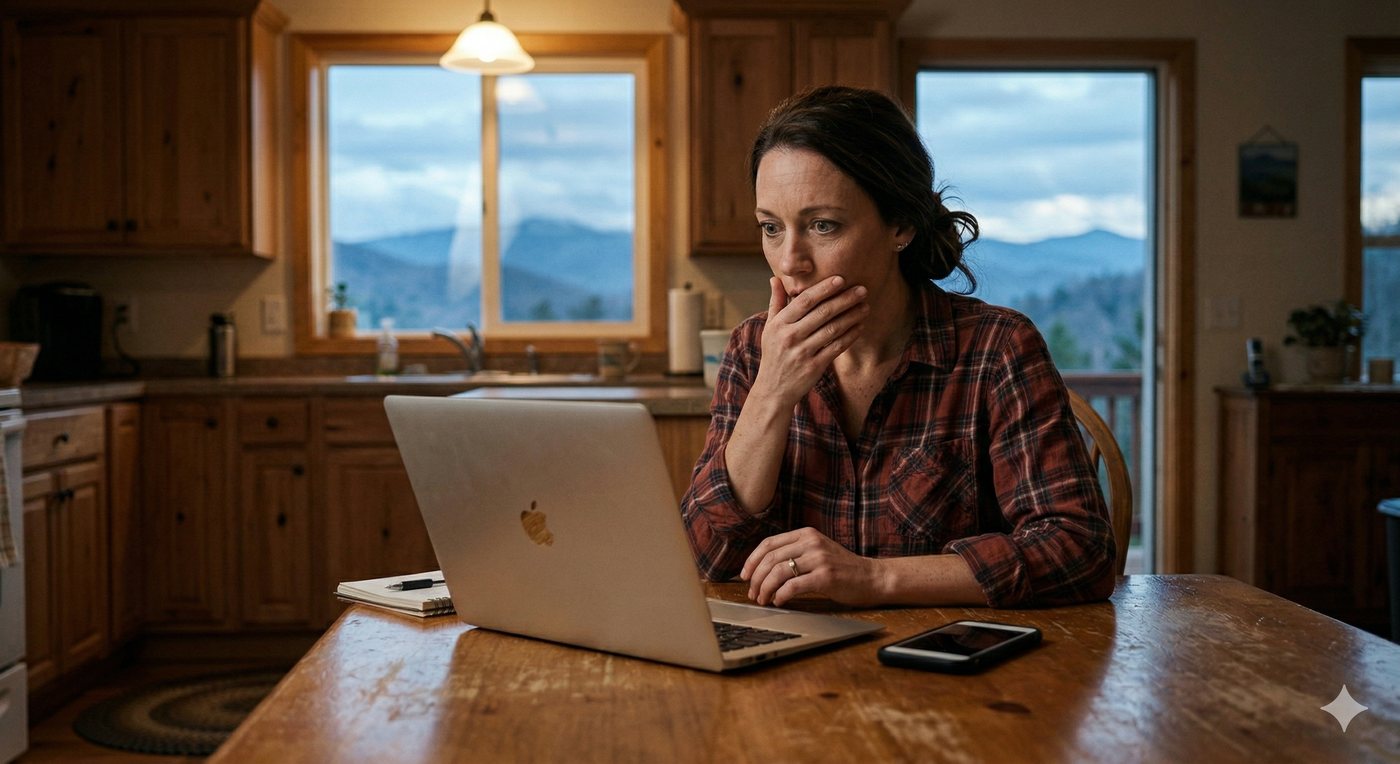
It was a Tuesday night in February — past ten o'clock, Lily already in bed, a quiet evening. Sarah sat at the kitchen table scrolling her own phone, half-watching the news, when she noticed the notifications.
Lily's tablet had been left on the couch. The screen lit up. Then again. Then a third time in rapid succession. Sarah told herself not to look. She's thirteen. She's allowed to have friends.
She looked anyway. The name she saw wasn't a classmate from her school. The messages weren't from anyone she recognized. And the tone of the last one — the compliment, the small push, the request disguised as a question — landed in her stomach like cold water.
She had not been asleep at the wheel. She thought she had been paying attention. She knew her neighbors and coached the girls' soccer team. Living in a safe place was supposed to mean something.
That night, she made a decision. She was going to learn exactly what she didn't know — and she was going to do something about it. This course is what she learned.

"The threat flows through every home in every American community.
No zip code is protected. Your child is not exempt."
The Threat Is Real — and It Is Here
Many parents feel a particular kind of safety about where they live. We chose our neighborhood, our school district, our town — because it feels right for our family. We raise our kids with Friday night games, local events, and familiar faces. It feels like protection.
It is not protection from this. Online threats don't follow geography. A predator in another state — or another country — can reach Lily on her couch in your town just as easily as they can reach a teenager in Charlotte or New York. The device in your child's hand is the only geography that matters to them.
CyberTipline reports received in 2025
Source: NCMEC 2025 CyberTipline data
Reports concerning online enticement in 2025
Source: NCMEC 2025 CyberTipline data
Reports concerning sextortion in 2025
Source: NCMEC 2025 CyberTipline data
Increase in online-enticement reports from 2024 to 2025; reporting-law changes contributed to the increase
Source: NCMEC 2025 CyberTipline data
Your community is not insulated from these numbers — regardless of where you live. Rural, suburban, and urban children all face online threats. In fact, children in smaller communities often have more unsupervised device time and fewer in-person peer alternatives, two factors predators specifically look for.
Where Lily Actually Lives Online
Online risks can arise across gaming, messaging, social, streaming, and emerging platforms. Risk depends on settings, contacts, behavior, and context—not a permanent label attached to one brand. Review the services your child actually uses and revisit their safety tools regularly.
Platforms and Features to Review
Gaming, messaging, and social platforms can include private messages, voice chat, friend requests, location features, purchases, and user-created spaces. Features and safety controls change frequently. Review the current settings with your child, limit contact from strangers, and use each platform's official family-safety guidance.
The pattern is consistent across every platform: predators go where children are, build rapport in public spaces, then move conversations to private messaging or encrypted apps. Understanding this flow is the first step to disrupting it.
The official DHS campaign educating parents and trusted adults on how to prevent and report online child exploitation. Search "Know2Protect" on YouTube to watch.
Find on YouTube →